
How to Choose the Right Precision Metal Stamping Suppliers?
In metal parts manufacturing, the choice of a stamping supplier directly impacts product quality, production efficiency, and cost control. Many companies encounter problems such as substandard stamping precision, delayed delivery, and unhelpful after-sales service due to unthinkingly selecting stamping suppliers. In fact, we can find a reliable precision metal stamping manufacturer based on four core dimensions—qualifications, technical capabilities, quality control, and service guarantees to avoid cooperation risks.
Basic Qualifications and Production Capacity of Precision Metal Stamping Suppliers
A legitimate precision metal stamping supplier must possess the necessary industry qualifications and a production scale matching the required needs. First, check the business license’s scope of business to confirm whether it includes “metal stamping processing” or related categories, avoiding unlicensed small workshops. If the products are used in specialized fields such as automotive or medical applications, it’s also necessary to verify whether they have ISO 9001 quality system certification and IATF 16949 certification for the automotive industry. These qualifications are fundamental guarantees of standardized processing.
Regarding production capacity, focus on the equipment configuration and production capacity of the metal stamping factory. High-quality precision stamping manufacturers are equipped with multi-specification presses (such as 100-500 ton servo punch presses), high-precision stamping dies processing equipment (slow wire cutting, EDM), and automated feeding and testing equipment to meet the stamping needs of metal parts with different complexities. At the same time, it is important to understand their average daily production capacity and order schedule to determine whether they can match your delivery cycle.
Stamping Dies’ R&D Capabilities of the Precision Metal Stamping Manufacturer
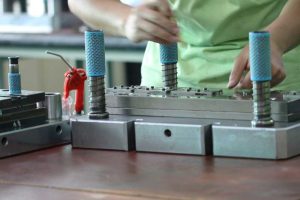
Dies are the soul of metal stamping. The stamping dies design and manufacturing capabilities of a metal stamping manufacturer directly determine the precision and consistency of the stamped parts. During the assessment, request past case studies from the manufacturer: for example, whether they have produced complex stamped parts similar to their own products (such as automotive parts with deep-drawn structures or micro-electronic connectors), and check whether the dimensional tolerances and surface smoothness of the stamped parts in these cases meet the requirements.
Furthermore, it is necessary to understand the maintenance and iteration capabilities of metal stamping toolings. Reliable manufacturers will maintain tooling ledgers, regularly inspect mold cutting edges and guide mechanisms to avoid burrs and dimensional deviations in stamped parts due to tooling wear; when product design adjustments are needed, they can quickly optimize the tooling structure instead of requiring external stamping die manufacturers to make modifications, which can significantly shorten the R&D and trial production cycle.
Whole-Process Quality Control of Precision Metal Stamping Company
Quality problems in metal stamping parts (such as cracking, deformation, and dimensional deviations) often stem from a lack of a comprehensive quality control system in the metal stamping company. When selecting a metal stamping company, it is crucial to understand its quality control process. Does the raw material stage involve supplier qualification verification and incoming inspection (such as random checks of steel plate thickness and hardness) to avoid using inferior materials? During the stamping process, is there online inspection (such as real-time inspection of surface defects using a vision system), rather than relying solely on manual sampling? In the finished product stage, is there full-dimensional inspection (such as using a coordinate measuring machine to check key dimensions) and performance testing (such as tensile strength and salt spray resistance tests) to ensure that each batch of products meets standards?
Service and After-Sales Support of Precision Metal Stamping Factory
Good service and after-sales support are crucial for long-term cooperation. The service capabilities of a precision metal stamping factory are reflected in its initial communication and subsequent response: Does it proactively address product needs and provide process optimization suggestions (e.g., suggesting staged stamping for complex structures to reduce costs)? Does it support small-batch trial production to help companies verify product design feasibility and avoid the risks of direct mass production?
It’s essential to confirm whether the metal stamping factory has a clear after-sales response mechanism. For example, can it dispatch technical personnel within 24 hours and provide a solution within 48 hours in case of quality issues? Can it promptly offer returns, exchanges, or replacements for defective products? Some high-quality precision metal stamping factories also provide “one-stop service,” covering post-stamping surface treatment (electroplating, spraying), CNC finishing, etc., reducing the hassle of dealing with multiple suppliers and improving production efficiency.

Choosing the right precision metal stamping supplier not only ensures stable product quality but also reduces communication costs and cooperation risks. By comprehensively evaluating the above four dimensions and conducting on-site inspections (checking the workshop environment, equipment status, and testing processes), you can find a reliable partner that matches your needs and safeguards the production of precision metal parts.