
The Numerous Advantages and Future Prospects of Precision Metal Stamping Parts
Precision metal stamping, a specialized process involving applying pressure to metal materials, is widely used in the manufacturing of hardware components. With the continuous improvement of quality standards for mechanical and electronic equipment parts, precision metal stamping has become a widely adopted and important manufacturing process in the industry due to its superior quality and efficiency.
Advantages of Precision Metal Stamping Parts
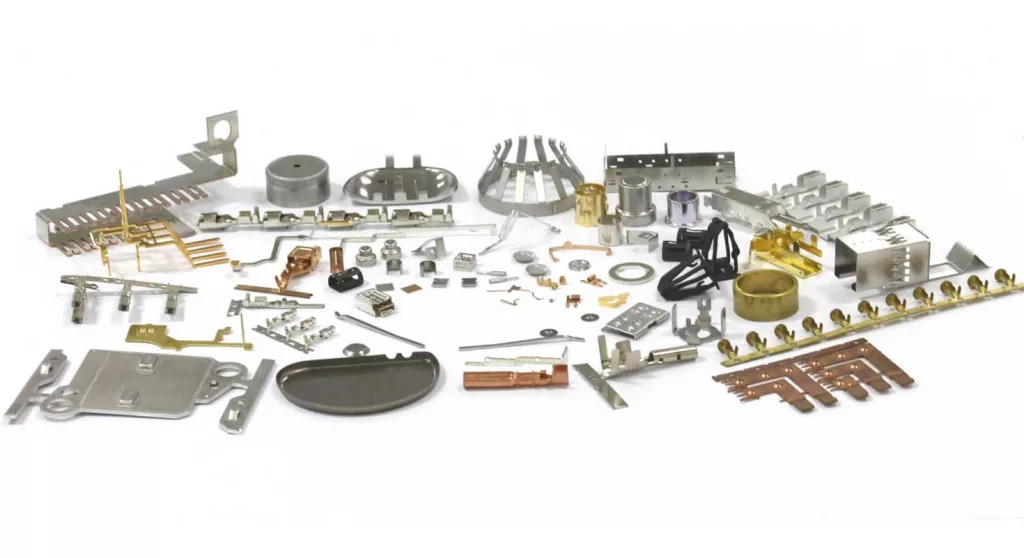
Compared to other methods of machining and plastic forming, precision metal stamping parts demonstrate unique advantages in both technical and economic aspects. Next, we will delve deeper into the numerous advantages of precision metal stamping parts.
High Efficiency and Easy Operation
Precision stamped metal parts production boasts extremely high efficiency and ease of operation, making it ideal for mechanized and automated production. This is because the stamping process primarily relies on stamping dies and specialized stamping equipment. Ordinary presses can achieve dozens of strokes per minute, while high-speed presses can reach hundreds or even thousands of strokes per minute. This high-efficiency stamping allows for the production of a complete stamped part with each stroke.
Longlife of Stamping Toolings
In the stamping process, the die plays a crucial role, ensuring the dimensional and shape accuracy of the stamped parts, typically without damaging the surface quality of the parts. Furthermore, the dies exhibit excellent durability and have a long service life. Therefore, the stamping process offers stable quality and good interchangeability, achieving precise replication with “identical” results.
Excellent Strength and Rigidity
Stamping processes can produce parts with a wide range of sizes and complex shapes. Whether it’s small parts like watch components or large parts like automotive frame rails and body panels, stamping can handle them all. Furthermore, due to the cold work hardening effect of the material during the stamping process, the resulting parts not only have precise dimensions but also possess excellent strength and rigidity.
Low Materials Consumption
One major advantage of the stamping process is that it generates almost no chips or scraps during processing, resulting in relatively low material consumption and eliminating the need for additional heating equipment. This leads to significant material and energy savings, thereby reducing the production cost of stamped parts.
Future Prospects of Precision Metal Stamping Parts
Looking back at the rapid development of manufacturing in recent decades, our material living standards have improved unprecedentedly. In today’s era of rapid technological advancements in information technology, the pace of technological innovation is breathtaking. It is foreseeable that stamped parts will have even broader development prospects in areas such as 5G communication enclosures and intelligent robots.
5G Era Communication Enclosures
With the advent of the 5G era, communication technology has undergone a revolutionary transformation. The ten-year cycle of technological innovation has been significantly shortened. 5G technology has not only become a core support for the military and national defense sectors but has also permeated all aspects of people’s lives, ranking alongside infrastructure such as water and electricity. To meet the signal transmission needs of 5G equipment, a large-scale deployment of 5G communication cabinets will be carried out nationwide, which will undoubtedly drive a huge and sustained demand for precision metal stamped parts. These stamped parts, as chassis components of the enclosures, will directly affect the outdoor durability of base station equipment. Especially under the long-term influence of natural factors such as wind and sun, high-quality stamped parts will ensure the stable operation of the equipment.
Intelligent Robots
In the wave of automation upgrades, intelligent robots are gradually becoming the main force in production, packaging, handling, and other processes. Their efficiency, high quality, and ability to work continuously have been widely praised. Especially in the logistics industry, intelligent robots can accurately complete complex tasks such as warehousing and shipping based on instructions from data centers. Precision metal stamping parts, as key components of these robots, not only need to possess moderate hardness and good metal ductility, but also require anti-oxidation and anti-corrosion properties to ensure the robot’s flexibility and durability. It is foreseeable that with the continuous development of intelligent robot technology, the market demand for precision metal stamping parts will continue to grow.
In Conclusion
In summary, precision metal stamping parts occupy an important position in the manufacturing industry due to their advantages, such as high precision, high strength, excellent surface quality, and high degree of customizability. If you are looking for a reliable and efficient solution, precision metal stamping parts are undoubtedly a worthwhile option to consider.