
Breakthrough in the Quality of High Voltage EV Charging Socket Terminals
Fast charging technology for new energy vehicles is rapidly advancing towards the 800V high-voltage platform. However, quality and manufacturing defects in the onboard high-voltage ev charging terminals have frequently caused charging safety and user experience issues. In November 2024, Ford officially recalled Tesla NACS adapters due to potential terminal quality problems that could lead to reduced charging speed and even damage to the charging port. In April 2024, Lecron recalled 1,624 Tesla NACS to CCS adapters due to a manufacturing defect in the terminal locking pins, which allowed the charging gun to detach without being unlocked, posing a risk of arc flashover.
These are not isolated incidents. Vehicle-mounted high-voltage charging terminals are gradually becoming a “hidden bottleneck” hindering industry development:
Insufficient Current-carrying Capacity Leads to High Temperatures
During high-current fast charging, material or structural defects cause abnormal heating. The Ford adapter recall was essentially due to performance degradation caused by excessively high terminal contact resistance, which in severe cases can even trigger system protection.

Poor Durability and Short Lifespan
Under frequent insertion and removal, inferior terminals will experience poor contact after several thousand cycles. According to tests conducted by the China Electric Power Research Institute, terminals that do not meet the national standard GB/T 20234 have an insertion and removal life of less than 5,000 cycles, far below the industry standard of 10,000 cycles.
Inadequate Sealing Poses Risks
The complex and variable in-vehicle environment makes inadequate sealing design highly susceptible to safety accidents. Incidents of water ingress and damage to charging ports during rainy weather are frequent. Tests conducted by the Wuhan Fire Department show that wet terminals can generate high-temperature arcs upon contact, not only burning out the interface but potentially igniting the vehicle.
Poor Compatibility Leads to Charging Rejection
The coexistence of 400V/800V voltage platforms and the lack of complete industry standardization result in frequent “mutual exclusion” between vehicles and charging stations. Data from the China Charging Alliance in 2025 shows that 21.3% of new energy vehicle owners have encountered in-vehicle terminal compatibility issues. 800V platform vehicles experience a 37% loss in charging efficiency on older 400V charging stations, and the protocol handshake failure rate doubles at -10℃.
To address these challenges, solutions must address the root causes. As the core of connection security, upgrading the performance of the terminals themselves is crucial.
Heju Stamping-Reliable EV Charging Terminals Stamping Factory
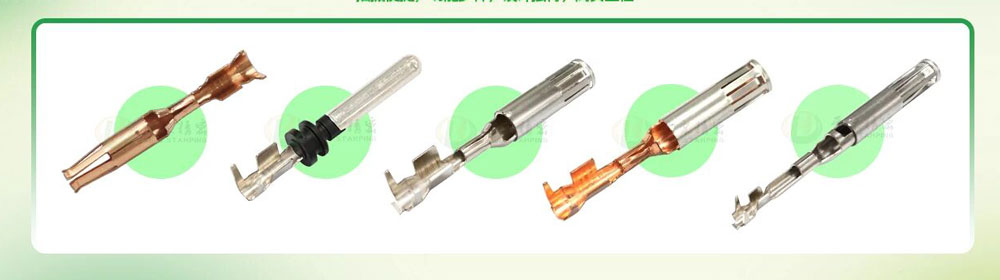
Dongguan Heju Precision Electronics Technology Co., Ltd. specializes in automotive connectors. Its high-voltage charging socket terminals utilize a stamping process to replace traditional automotive parts, precisely meeting and surpassing industry pain points in key performance aspects: excellent current carrying capacity and low contact resistance fundamentally suppress abnormal heat generation; significantly improved mating and unmating durability easily handles high-frequency use; and reinforced sealing design effectively prevents water ingress and arcing risks. While ensuring performance comparable to leading international brands, it also offers a cost-effective advantage, primarily suitable for new energy vehicles and charging piles, providing reliable assurance for charging safety and stability in the era of high-voltage fast charging.