
How Do EV Charging Terminals Achieve a 10,000-cycle Lifespan?
Repeatedly plugging and unplugging the charging connector subjects the electric vehicle charging terminals to mechanical friction, arc erosion, and oxidation/corrosion, which easily leads to performance deterioration and unstable charging. To address these rigorous operating conditions, the national standard GB/T 20234.1-2023 explicitly mandates a mating durability of 10,000 cycles for charging connectors, establishing a fundamental quality benchmark for the industry.
Given the wear on one side and the 10,000-cycle requirement on the other, how is this capability achieved?
Plating Material: Wear-resistant, Conductive Composite Coating that Minimizes Wear Over 10,000 Mating Cycles.
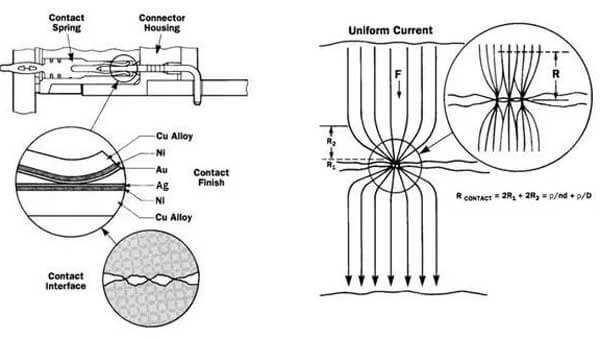
Copper alloys are typically selected as the base material for EV charging connector terminals/pins. However, since pure copper inevitably undergoes wear during repeated friction, a protective surface coating is essential. For high-voltage fast-charging applications, the prevailing solution is a “copper substrate + nickel underlayer + silver top layer” configuration. Silver offers superior conductivity, effectively minimizing contact resistance and temperature rise.
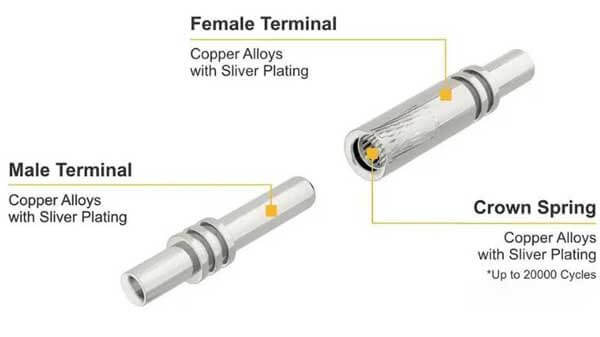
However, silver itself lacks sufficient wear resistance, so a nickel underlayer is introduced. Nickel is hard and wear-resistant, and it also prevents copper atoms from diffusing into the silver layer at high temperatures to form brittle alloys, thereby avoiding the degradation of electrical conductivity.
Elastic Structure: A Contact Design with Lasting Resilience that Maintains a Secure Fit Through Tens of Thousands of Mating Cycles.
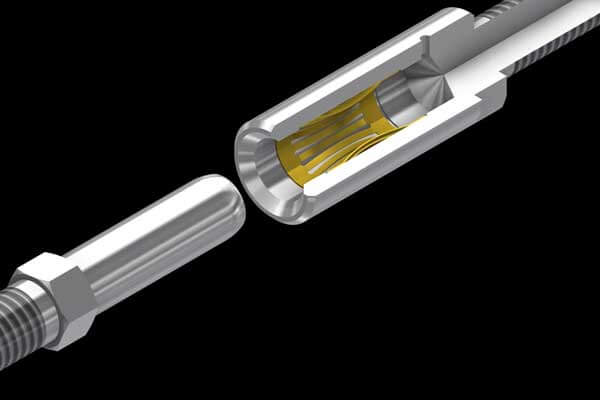
No matter how superior the plating is, if the EV charging terminal loses its elasticity, the connection will become unreliable. Therefore, elastic components typically utilize phosphor bronze or beryllium copper alloys, combined with hyperboloid, crown spring, or wire spring contact structures.
This type of design maintains resilience even after prolonged fatigue, keeps insertion and withdrawal forces within a reasonable range, and establishes multiple contact paths. As a result, the degradation of contact resistance remains within standard limits even after 10,000 mating cycles.
Anti-arc Erosion Design: Blocks Electrical Sparks and Prevents Terminal Surface Burns.
Although the interlocking design mandated by national standards has significantly reduced the risk of live insertion and removal, arc protection remains an indispensable supplementary guarantee for charging terminal protection under extreme conditions. Under high-current fast charging conditions, if the interlock fails or the charging gun is forcibly removed, electrical sparks can easily be generated during insertion and removal. These sparks cause continuous point-like erosion, damaging the terminal contact surface, forming uneven burn marks, and ultimately leading to poor contact and excessive temperature rise.
High-quality terminals, through the thermal barrier effect of a thick nickel underlayer, combined with the system’s rigorous multi-layer electrical interlocking design, can significantly reduce the risk of arcing. Even in the event of an accidental impact, the silver layer will not be deeply burned.
Rigorous Automotive-Grade Testing: Comprehensive durability validation for a stable 10,000-cycle service life.
While high-quality materials and structural design form the foundation, standardized automotive-grade validation is the key to guaranteeing service life. Before mass production, EV charging connector terminals undergo comprehensive testing, including 10,000 continuous mating/unmating cycles, high- and low-temperature cycling, high-current temperature rise tests, arc erosion tests, and salt spray corrosion tests. These procedures precisely monitor contact resistance, mating precision, and surface wear after every cycle, effectively eliminating manufacturing defects and structural risks.

From micron-level control of coating thickness to elastic-structure optimization through mechanical simulation and multi-stage automotive-grade durability testing, the charging terminal’s 10,000-cycle lifespan is supported by a system integrating materials science, structural design, and manufacturing processes.
HejuStamping-EV Charging Terminals OEM Factory
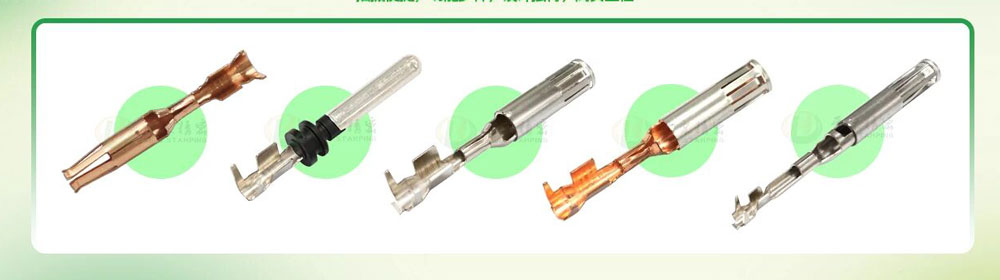
Dongguan Heju Precision Electronic Technology Co., Ltd. is a high-tech enterprise specializing in the R&D, design, and manufacturing of automotive wiring harness terminals. With years of experience in producing EV charging terminals pins, the company has accumulated extensive technical expertise in plating processes, elastic structure design, and high-durability validation. It holds ISO9001, ISO14001, and IATF16949 certifications and maintains a comprehensive quality inspection system alongside supporting electroplating services, enabling it to customize products to specific customer requirements.