
OSD, Fuse, and Rupture Discs: How do the “Safety Trio” on the Battery Cover Perform their Respective Functions?
In the safety system of new energy lithium batteries, thermal runaway prevention is crucial. While cell materials and battery pack protection are well-known, the “safety trio”—OSD, Fuse, and rupture discs—on the square aluminum battery cover creates an immediate, vital barrier for the cell. Each device has a distinct role, and together they intercept risks like overcharging, short circuits, and overvoltage. This teamwork helps ensure battery safety.
First Line of Defense: OSD Overcharge Protection Device – Early Intervention, Controlling Risks at the Source
The OSD (On-Demand Sheet) is a proactive protection structure designed to address battery overcharge faults. It focuses on early warning and intervention. When a battery is overcharged and voltage spikes, the internal electrolyte decomposes quickly, generating gas and raising pressure. Once internal pressure reaches 0.4-0.5 MPa, the OSD sheet mechanically flips, creating contact with the negative electrode and forming an internal leakage circuit. This action suppresses abnormal voltage, prevents overcharging from worsening, and eliminates future serious hazards.
The second line of defense: Fuse – Power Cut-off to Stop Losses and Lock out Circuit Risks
The fuse (short-circuit device) acts as a circuit safety barrier, working with the OSD (Output Current Device) for efficient protection. When the OSD forms a leakage circuit, a large inrush current melts the fuse, cutting off the main circuit. This isolates fault risks and stops high cell temperature, arcing, and overheating from ongoing high current. The fuse addresses limitations of mechanical protection and prevents the fault from escalating.
The last line of defense: Rupture Discs- Ultimate Pressure Relief, Safeguarding the Safety
If both OSD and Fuse protection fail, the battery may enter severe thermal runaway. Gas accumulates and pressure rises rapidly. The battery rupture discs then activates for final protection. Its etched aluminum sheet is calibrated with a precise pressure threshold. When internal pressure reaches 0.9-1.0 MPa, the etched area tears in a set direction, releasing gas and impurities within milliseconds. This fast pressure relief reduces risks of battery fires, explosions, and other major accidents, forming the last safeguard for battery safety.
Three-piece Collaborative Logic: Layered Redundancy, Comprehensive Security Protection.
This protective structure has high safety redundancy. When the battery works normally, the OSD, Fuse, and explosion-proof valve remain in silent standby. There is no impact on charging, discharging, or daily use. If extreme overcharging, short circuits, or faults occur, tiered protection activates. OSD intervenes first, the Fuse cuts off power, and the explosion-proof valve relieves pressure if needed. This approach prevents risks like battery bulging, fire, and explosion. It guarantees the safety of square aluminum-cased batteries.
HejuStamping-Reliable Battery Rupture Discs Supplier
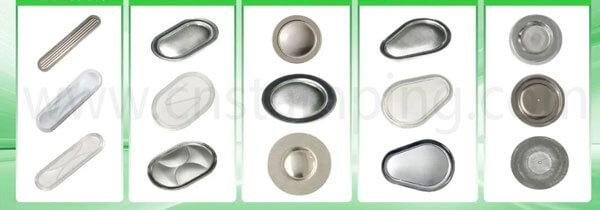
The battery rupture discs acts as the battery’s last defense. Dongguan Heju Precision Electronics Technology Co., Ltd. is among China’s earliest makers of these battery rupture discs. The company offers precise manufacturing, with pressure differential control down to 0.02MPa and CPK > 2.0. From material selection to delivery, Heju Precision ensures battery rupture discs safety. The company uses strict processes and reliable data to guard this critical safety feature.